


so What is Aluminum foil grade 1235? 1235 Alloy Aluminum Foil is an aluminum alloy material commonly used in the packaging industry. It is as high as 99.35% pure, has good flexibility and ductility, and also has good electrical and thermal conductivity. The surface is coated or painted to increase its resistance to corrosion and abrasion. 1235 Alloy Aluminum Foil is widely used in food packaging, pharmaceu ...

Alloy type of aluminum foil for cosmetics 8011 aluminum foil 8021 alloy aluminum foil 8079 aluminum foil alloy Where is aluminum foil for cosmetics used in cosmetics? 1-Packaging: Some products in cosmetics, such as facial masks, eye masks, lip masks, patches, etc., usually use aluminum foil packaging, because aluminum foil has good moisture-proof, anti-oxidation, heat insulation, fresh-keeping and ...

Countries and regions where HWALU aluminum foil is sold well Asia: China, Japan, India, Korea, Malaysia, Vietnam, Indonesia, Thailand, Philippines, Singapore, etc. North America: United States, Canada, Mexico, etc. Europe: Germany, UK, France, Italy, Netherlands, Poland, Spain, Sweden, Switzerland, etc. Oceania: Australia, New Zealand, etc. Central and South America: Brazil, A ...

Aluminum foil for flexible packaging Use 1235/1145 Aluminum foil for high temperature cooking food packaging 1235/1145 Aluminum foil for liquid food packaging 1235/1145 Aluminum foil for solid food packaging 1235/1145 Aluminum foil for pharmaceutical packaging Characteristic It has strong ductility and elongation characteristics and has good thermal stability, fewer pinholes, and good sha ...

What is aluminum foil for pharmaceutical packaging Aluminum foil for pharmaceutical packaging is usually composed of aluminum foil, plastic film, and a glue layer. Aluminium foil has many advantages as a packaging material, such as moisture-proof, anti-oxidation and anti-ultraviolet properties, and can effectively protect medicines from light, oxygen, and moisture. Aluminium foil for pharmaceutical packaging ...
In the production of double foil, the rolling of aluminum foil is divided into three processes: rough rolling, intermediate rolling, and finishing rolling. From a technological point of view, it can be roughly divided from the thickness of the rolling exit. The general method is that the exit thickness is greater than Or equal to 0.05mm is rough rolling, the exit thickness is between 0.013 and 0.05 is intermediat ...
Coiling defects mainly refer to loose, layer channeling, tower shape, warping and so on. Aluminum foil roll during the winding process. Because the tension of aluminum foil is limited, enough tension is the condition to form a certain tension gradient. Therefore, the winding quality ultimately depends on good shape, reasonable process parameters and suitable precision sleeve. It is ideal to obtain tight coils ...
ITEM SIZE (MM) ALLOY / TEMPER WEIGHT (KGS) ALUMINIUM FOIL, ID: 76MM, ROLL LENGTH: 12000 - 13000 meters 1 0.007*1270 1235 O 18000.00
Only China, the United States, Japan and Germany can produce double zero foils with a thickness of 0.0046mm in the world. From a technical point of view, it is not difficult to produce such thin foils, but it is not easy to efficiently produce high-quality double-zero foils on a large scale. At present, many enterprises in my country can realize the commercial production of double zero foil, mainly including: ...
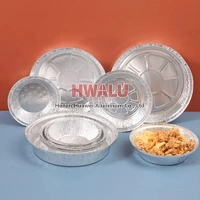
Lunch boxes are essential packaging boxes in the food packaging industry. Common lunch box packaging materials on the market include plastic lunch boxes, aluminum foil lunch boxes, etc. Among them, aluminum foil lunch boxes are more commonly used. For lunch box packaging, aluminum foil is widely used due to its excellent barrier properties, flexibility and lightness. What aluminum foil alloy is most suitable for ...
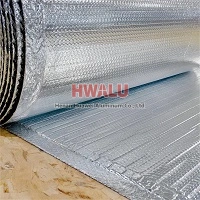
Is aluminum foil a good insulator? It is certain that aluminum foil itself is not a good insulator, because aluminum foil can conduct electricity. Aluminum foil has relatively poor insulation properties. Although aluminum foil has certain insulating properties in some cases, its insulating properties are not as good as other insulating materials. Because under normal circumstances, the surface of aluminum foi ...