


8011 vs. 8021 Alloy Aluminum Foil: A Precision Selection Guide for Your Candy Blister Packaging In today's candy packaging landscape, where freshness, functionality, and premiumization are paramount, blister packaging has become a critical element for showcasing product value. As the core barrier material, the choice of aluminum alloy directly determines the ultimate performance of the package. Among the many op ...

Double zero aluminum foil refers to aluminum foil with a thickness between 0.001mm ( 1 micron ) and 0.01mm ( 10 micron ). Such as 0.001mm ( 1 micron ), 0.002mm ( 2 micron ), 0.003mm ( 3 micron ), 0.004mm ( 4 micron ), 0.005mm ( 5 micron ), 0.006mm ( 6 micron ), 0.007mm ( 7 micron ), 0.008mm ( 8 micron ), 0.009mm ( 9 micron ) 0.005 mic aluminium foil Advantages of 0.001-0.01 micron aluminum foil An ...

what is Cold forming alu alu foil? Cold forming blister foil can absolutely resist vapor, oxygen and UV rays with good performance of aroma barrier. Each blister is a single protection unit, no effect to barrier after opening first cavity. Cold forming foil is suitable to pack drugs that easy to be affected in wet regions and tropics. It can be shaped in various appearance by changing stamping mold. ...

Cold Aluminum A Complete Engineering Guide In the world of advanced manufacturing, where precision meets performance, a specialized class of materials forms the backbone of innovation. Known for its exceptional strength, superior dimensional accuracy, and excellent surface finish, Cold Aluminum represents a pinnacle of metallurgical processing. Unlike its as-cast or hot-worked counterparts, Cold Aluminum is t ...
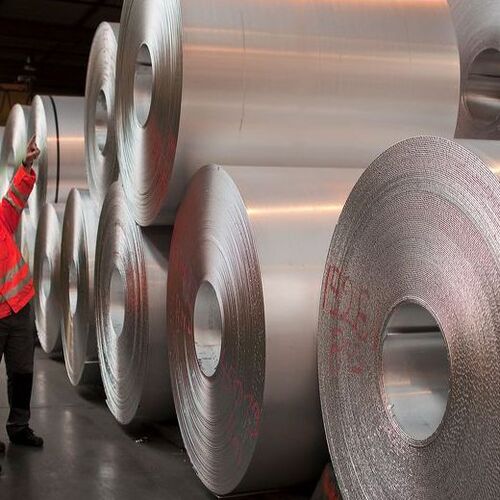
Introduction to industrial aluminum foil What is industrial aluminum foil? Aluminum foil is a kind of aluminum rolled material. Aluminum foil mainly refers to thickness. In the industry, aluminum products with a thickness of less than 0.2mm are usually called aluminum foil. They are usually cut longitudinally at the edges and delivered in rolls. Industrial aluminum foil, as the name suggests, is an aluminum foil ...

Aluminum Foil VS Aluminum Coil Both aluminum foil and aluminum coil are products made of aluminum, but they have different uses and properties. There are some similarities in properties, but there are also many differences. What are the differences between aluminum foil and aluminum coil? Differences in shape and thickness: Aluminum foil: - Usually very thin, usually less than 0.2 mm (200 microns) th ...

Epoxy-Coated Aluminum Foil: In-Depth Analysis of Production, Applications, and Future of High-Performance Composite Materials Abstract Epoxy-coated aluminum foil is a high-value-added functional material created by applying an epoxy resin coating onto an aluminum foil substrate through precise surface treatment and composite processes. Its core technology lies in constructing a polymer barrier layer on the meta ...

Epoxy Coated Aluminum Foil: A Detailed Guide to Manufacturing Technology and Applications In the fields of high-end packaging, electromagnetic shielding, and advanced composite materials, Epoxy Coated Aluminum Foil has become a critical functional material due to its excellent adhesion, corrosion resistance, and customizable electrical properties. This article provides a systematic, in-depth analysis of its cor ...

Epoxy Coated Aluminum Foil: A Complete Guide to Process, Advantages, and Applications In modern industry, aluminum foil has evolved from a basic metal material into a key functional component through surface treatment. Epoxy Coated Aluminum Foil is the preferred material in aerospace, electronics, high-end packaging, and composite materials due to its exceptional corrosion resistance, strong adhesion, excellent ...
In the production process of aluminum foil, there are multiple processes such as rolling, finishing, annealing, packaging, etc. The interlocking production process, any problem in any link may cause aluminum foil quality problems. The quality defects of the purchased aluminum foil products will not only affect the appearance, but also directly affect the quality of the products produced, and even more directly ca ...
The selection principle of pass processing rate is as follows: (1) Under the premise that the equipment capacity allows the rolling oil to have good lubrication and cooling performance, and can obtain good surface quality and shape quality, the plasticity of the rolled metal should be fully utilized, and the large pass processing rate should be used as much as possible to improve the rolling mill Production ef ...