


Advantages and main applications of aluminum foil food packaging Aluminum foil food packaging is beautiful, lightweight, easy to process, and easy to recycle; aluminum foil packaging is safe, hygienic, and helps maintain the aroma of food. It can keep food fresh for a long time and provide protection from light, ultraviolet rays, grease, water vapor, oxygen and microorganisms. In addition, please be aware of th ...

What is aluminum foil for pallets Aluminum tray foil is an aluminum foil material used to wrap and cover food trays. This aluminum foil usually has a larger area and a thinner thickness to fit the size and shape of the tray and can resist high temperature and humidity to protect food from contamination and damage. Aluminum foil for trays is widely used in the food service industry, especially in hotels, resta ...

What is Aluminum Foil for Coffee Capsules Aluminum foil for coffee capsules generally refers to small capsules used to package single-serve coffee, which are filled with selected ground coffee for freshness and convenience. This capsule is usually made of aluminum foil, because aluminum foil is a material with good oxygen barrier and moisture resistance, which can prevent the coffee powder from moisture, oxid ...

What is aluminum foil for sealing Aluminum foil for sealing is a kind of aluminum foil used for sealing packaging. It is usually composed of aluminum foil and plastic film and other materials, and has good sealing performance and fresh-keeping performance. Aluminum foil for sealing is widely used in the packaging of food, medicine, cosmetics, medical equipment and other industries. Aluminum foil for sealing i ...

What is thick aluminum foil Thick aluminum foil refers to a special type of aluminum foil that is thicker than regular aluminum foil. Usually, the thickness of the thick aluminum foil is between 0.2-0.3 mm, which is much thicker than regular aluminum foil. Like conventional aluminium foil, thick aluminum foil also has excellent properties, such as high electrical conductivity, fire prevention, corrosion resis ...
As a metal material, aluminum foil is non-toxic, tasteless, has excellent electrical conductivity and light-shielding properties, extremely high moisture resistance, gas barrier properties, and its barrier performance is incomparable and irreplaceable by any other polymer materials and vapor-deposited films. of. Perhaps it is precisely because aluminum foil is a metal material completely different from plastic, i ...
Cast-rolled aluminum foil production process Aluminum liquid, aluminum ingot -> Smelt -> Continuous roll casting -> Winding -> Cast roll finished product Plain foil production process Plain foil -> Cast-rolled coil -> Cold rolled -> Foil rolling -> Slitting -> Annealing -> Plain foil finished product The manufacture of aluminum foil is similar to making pasta at home. A large b ...
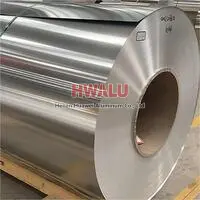
Aluminum foil and aluminum coil are both versatile aluminum alloy materials used in different applications across various industries. Aluminum coil alloy and aluminum foil alloy have similar properties in many aspects, but also have many different characteristics. Huawei will make a detailed comparison between the two in terms of properties, uses, etc.: What are aluminum coils and aluminum foil? Aluminum Foil: ...
Coated aluminum foil is formed after surface treatment on the basis of non-coated aluminum foil. In addition to the chemical composition, mechanical properties and geometric dimensions required by the above non-coated aluminum foil, it should also have good shape and shape. coating properties. 1. Plate type of aluminum foil: First of all, the production process of coated aluminum foil requires that the alum ...
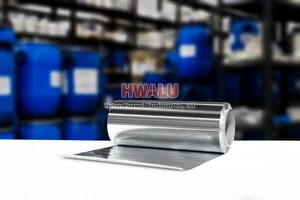
Aluminum foil plays a vital role in the construction of lithium-ion batteries. There are many models in the 1000-8000 series alloys that can be used in battery production. Pure aluminum foil: Pure aluminum foil commonly used in lithium batteries includes various alloy grades such as 1060, 1050, 1145, and 1235. These foils are usually in different states such as O, H14, H18, H24, H22. Especially alloy 1145. ...
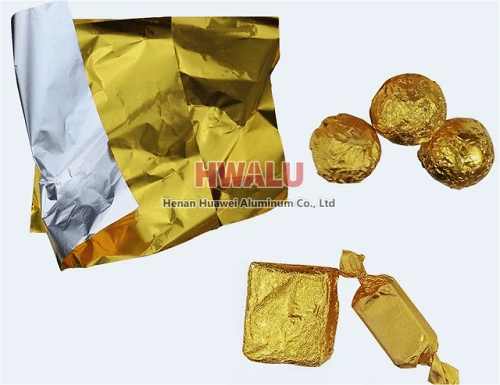
Can aluminum foil be used to wrap chocolate?Aluminum foil can be used to wrap chocolate, thanks to its properties. In fact, aluminum foil packaging of chocolate is a common and practical method of packaging and preserving chocolate. Aluminum foil is suitable for packaging chocolate for the following reasons: Barrier properties: Aluminum foil effectively blocks moisture, air, light and odors. Helps protect c ...