


1. What is Aluminum Foil for Condenser Fins Aluminum foil for condenser fins is a material used in the manufacture of condensers. A condenser is a device that cools a gas or vapor into a liquid and is commonly used in refrigeration, air conditioning, automotive and industrial applications. Fins are an important part of the condenser, and their function is to increase the cooling area and heat exchange effi ...

What is 13 micron aluminum foil? "Aluminum Foil 13 Micron" is a thin and light aluminum foil that falls within the thickness range of household aluminum foil and is commonly used for various packaging and insulation purposes. It is a very common thickness specification. 13 micron aluminum foil equivalent name 13μm aluminum foil 0.013mm aluminum foil Household packaging aluminum foil 13 micron aluminum foil ...
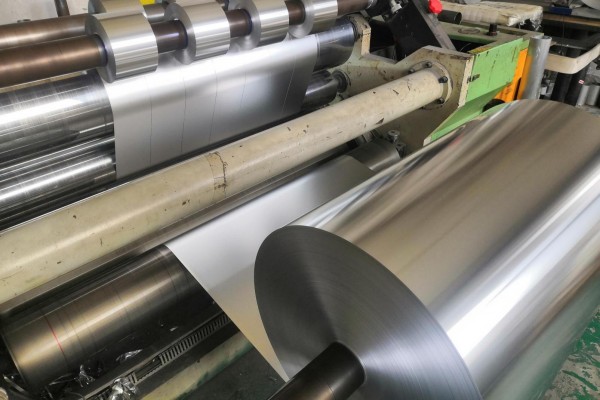
1050 Aluminum Foil - High Purity Food Grade Aluminum Foil - Henan Huawei Aluminum 1050 aluminum foil belongs to the 1000 series of high-purity industrial pure aluminum foils, with an aluminum content of $\ge 99.5\%$. Due to its high purity, it offers excellent thermal and electrical conductivity, extreme flexibility, and a superior surface finish, making it a core pure aluminum foil product for cross-border ex ...

1070 aluminum foil introduction 1070 aluminum foil has high plasticity, corrosion resistance, good electrical and thermal conductivity, and is suitable for use in gaskets and capacitors made of aluminum foil. Huawei Aluminum introduced Zhuoshen foil rolling mill to ensure good plate shape. Warwick Aluminum's 1070 aluminum foil is used in electronic foil, with a market share of over 80%. The product has stable pe ...

1. Introduction to Insulated Aluminum Foil 1.1 What Is Insulated Aluminum Foil? Insulated aluminum foil is a high-performance composite material that merges the reflective and protective properties of aluminum foil with the insulating capabilities of secondary materials. At its core, it consists of a thin aluminum foil layer—ranging from 6 to 200 microns—bonded to thermal or electrical insulating materials s ...

Surface Treatment Technologies for 8079 Aluminum Foil: Coating, Embossing, and Roughening In modern industrial and high-end packaging applications, surface-treated 8079 aluminum foil has become increasingly important due to its superior mechanical properties, chemical resistance, and aesthetic versatility. Unlike standard aluminum foils, which rely solely on their natural aluminum surface, 8079 foil can be enhan ...
The rolling oil and other oil stains remaining on the surface of the foil, which are formed on the foil surface to varying degrees after annealing, are called oil spots. The main reasons for oil spots: high degree of oil in aluminum foil rolling, or inappropriate distillation range of rolling oil; mechanical oil infiltration in aluminum foil rolling oil; improper annealing process; excessive oil on the surface ...

The thickness of aluminum foil for food packaging is generally between 0.015-0.03 mm. The exact thickness of aluminum foil you choose depends on the type of food being packaged and the desired shelf life. For food that needs to be stored for a long time, it is recommended to choose thicker aluminum foil, such as 0.02-0.03 mm, to provide better protection against oxygen, water, moisture and ultraviolet rays, th ...

Food-Grade Aluminum Foil Certification Requirements The global regulatory landscape for food-grade aluminum foil has evolved rapidly, driven by stricter food safety laws, advanced migration testing methods, and increasing consumer awareness. Today, achieving qualification is no longer limited to meeting basic national standards—it requires a multilayered system touching metallurgy, surface chemistry, process va ...
What is the difference between aluminum foil and tin foil? Can it be used for oven heating? Is aluminum foil toxic when heated? 1. Different properties: Aluminum foil paper is made of metal aluminum or aluminum alloy through rolling equipment, and the thickness is less than 0.025mm. Tin foil is made of metal tin through rolling equipment. 2. The melting point is different: the melting point of aluminum foil ...

Detailed Explanation of the Processing Flow for Food-Grade Aluminum Foil Food-grade aluminum foil is a critical functional material that comes into direct contact with food in packaging systems. Its processing route not only determines barrier performance and mechanical stability, but also directly affects food-contact regulatory compliance and long-term reliability in use. Compared with conventional industri ...