


What is thick aluminum foil Thick aluminum foil refers to a special type of aluminum foil that is thicker than regular aluminum foil. Usually, the thickness of the thick aluminum foil is between 0.2-0.3 mm, which is much thicker than regular aluminum foil. Like conventional aluminium foil, thick aluminum foil also has excellent properties, such as high electrical conductivity, fire prevention, corrosion resis ...

What is aluminum foil for bowls Aluminum foil for bowls refers to a kind of aluminum foil material used to cover food in bowls. It's usually a sheet of aluminum foil that wraps easily around the bowl and keeps food fresh and warm. Aluminum foil for bowls is commonly used for storing and heating food and can be used in the microwave or oven. There are multiple benefits to using aluminum foil for bowls, it can ...

What is aluminum foil for wrapping Aluminum foil for wrapping is a thin, flexible sheet of aluminum that is commonly used for wrapping food items or other objects for storage or transportation. It is made from a sheet of aluminum that has been rolled out to a desired thickness and then processed through a series of rollers to give it the desired strength and flexibility. Aluminum foil for wrapping is availabl ...

8079 aluminum foil for retort pouch I. Introduction: Why Are Material Requirements for Retort Pouches So Stringent? With the rapid expansion of the ready-to-eat food, prepared meals, pet food, and medical sterile packaging sectors, retort pouches have emerged as one of the most reliable flexible packaging solutions worldwide. Unlike standard flexible packaging, retort pouches must endure harsh high-temperature ...

1. Executive Summary 8011 H14 aluminum foil serves as a specialized substrate for pharmaceutical blister packaging, particularly when manufacturers require a combination of barrier protection, mechanical stability, surface quality, and converting performance. As a lidding material, the aluminum foil forms the primary barrier layer of the blister pack and is typically combined with printing, protective, primer ...

Which Side of Aluminum Foil Should Touch Food? Aluminum foil (commonly referred to as tin foil, though not actually tin) is made by pressing aluminum into thin metal sheets. Approximately 75% of its applications are in the packaging of food, cosmetics, and chemical products, making it a very common material in daily life and industry. However, when using aluminum foil to wrap or cook food, many people won ...
Aluminum foil is a good heat insulator because it is a poor conductor of heat. Heat can only be transferred through a material by conduction, convection, or radiation. In the case of aluminum foil, heat transfer occurs primarily through radiation, which is the emission of electromagnetic waves from the surface of an object. Aluminum foil is a shiny, reflective material that reflects radiant heat back towards i ...

Differences Between Aluminum 5052 And Aluminum 6061 Introduction of 5052 aluminum alloy Aluminum 5052 is the most widely used aluminum alloy in the 5000 series. 5052 aluminum belongs to the A1-Mg alloy, also known as rust-proof aluminum. 5052 aluminum alloy has high strength. When magnesium is added, 5052 aluminum plate has better corrosion resistance and enhanced strength. Aluminum alloy 5052 with excellent ...

Aluminum foil is often colloquially referred to as "tin foil" due to historical reasons and similarities in appearance between the two materials. However, it's important to note that aluminum foil and tin foil are not the same thing. Here's why aluminum foil is sometimes called "tin foil": Historical Context: The term "tin foil" originated at a time when actual tin was used to create thin sheets for wrappin ...

Decoding Heavy Duty Aluminum Foil Thickness: A Guide to Strength and Performance In kitchens and industries worldwide, aluminum foil is an indispensable tool. But not all foil is created equal. The term "heavy duty" is more than just a marketing label; it is a direct promise of enhanced performance, and that promise is fundamentally rooted in one critical, measurable attribute: thickness. Understanding heavy ...
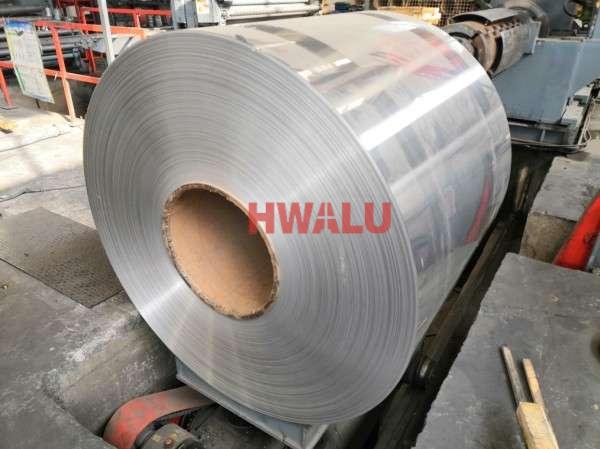
When the hose is stored for a long time or squeezed repeatedly, will the aluminum foil barrier layer develop pinholes or cracks due to deformation? HW-A. Definition of the Core Issue: Nature and Risks of the Aluminum Foil Barrier Deformation Issue In tube packaging, the aluminum foil barrier (typically 0.006~0.015mm thick soft aluminum foil, mostly using grades such as 1235 and 8011) serves the core function ...