


What is the aluminum foil of the burner cover? The aluminum foil cover for the burner head is aluminum foil cover used to protect the burner head. A burner refers to a flame nozzle used on a gas stove, gas stove, or other gas appliances, which is used to mix gas and air and ignite it to produce a flame. During long-term use, grease and dust may accumulate on the surface of the burner, which may affect the qua ...

Aluminum foil for flexible packaging Use 1235/1145 Aluminum foil for high temperature cooking food packaging 1235/1145 Aluminum foil for liquid food packaging 1235/1145 Aluminum foil for solid food packaging 1235/1145 Aluminum foil for pharmaceutical packaging Characteristic It has strong ductility and elongation characteristics and has good thermal stability, fewer pinholes, and good sha ...

What is 1050 H18 aluminum foil 1050 H18 aluminum foil is an aluminum foil material with high purity and good mechanical properties. Among them, 1050 represents the grade of aluminum alloy, and H18 represents the hardness level. 1050 aluminum alloy is an aluminum alloy with a purity of up to 99.5%, which has good corrosion resistance, thermal conductivity and machinability. H18 represents the aluminum foil aft ...
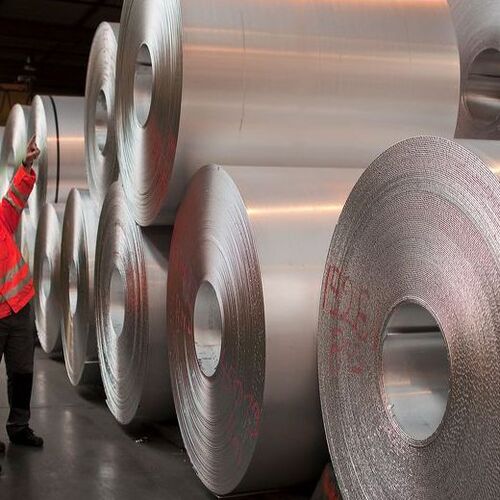
Introduction to industrial aluminum foil What is industrial aluminum foil? Aluminum foil is a kind of aluminum rolled material. Aluminum foil mainly refers to thickness. In the industry, aluminum products with a thickness of less than 0.2mm are usually called aluminum foil. They are usually cut longitudinally at the edges and delivered in rolls. Industrial aluminum foil, as the name suggests, is an aluminum foil ...

1. What is Aluminum Foil for Condenser Fins Aluminum foil for condenser fins is a material used in the manufacture of condensers. A condenser is a device that cools a gas or vapor into a liquid and is commonly used in refrigeration, air conditioning, automotive and industrial applications. Fins are an important part of the condenser, and their function is to increase the cooling area and heat exchange effi ...

When both 1050 and 1060 are used for folding and storing kitchenware, after repeated bending, is there any difference in the time when fatigue cracks occur due to the difference in purity? How can the toughness be enhanced through the rolling process? 1. Introduction: Material Requirements for Foldable Storage Cookware Accessories and the Positioning of 1060 Aluminum Foldable storage cookware accessories (e.g., ...

Mechanical Performance Comparison of 8079, 8011, and 1235 Aluminum Foils: A Comprehensive Technical Analysis 1. Introduction Aluminum foils play a critical role in modern packaging, protective materials, and industrial applications, particularly in sectors where high barrier performance, mechanical reliability, and process adaptability are fundamental requirements. Among commercially used aluminum foil alloys, ...

Analysis of the Performance Characteristics and Production Process of 8011 Aluminum Foil 1. Introduction Aluminum foil is one of the most versatile materials in modern manufacturing, serving applications ranging from household packaging to advanced industrial insulation. Among various aluminum alloys, 8011 aluminum foil has gained widespread recognition due to its excellent combination of mechanical strength, c ...

For the punching process of small bag food, can replacing the die with a 6.35μm size improve the punching yield? 1. Introduction: Core Requirements of Blanking Process for Small-Pouch Food Packaging The blanking process is critical for small-pouch food packaging (e.g., 10-50g nuts, 20ml seasonings). Its core requirements include: no burrs (≤0.1mm), no tearing, and reliable heat-seal tightness (oxygen transm ...
1. The raw materials are non-toxic and the quality is safe Aluminum foil is made of primary aluminum alloy after rolling through multiple processes, and it has no harmful substances such as heavy metals. In the aluminum foil production process, a high-temperature annealing and disinfection process is used. Therefore, the aluminum foil can be safely in contact with food and will not contain or help the growth o ...
1) Surface treatment (chemical etching, electrochemical etching, DC anodizing, corona treatment); 2) Conductive coating (surface coating carbon, graphene coating, carbon nanotube coating, composite coating); 3) 3D porous structure (foam structure, nanobelt structure, nano cone mechanism, fiber weaving mechanism); 4) Composite modification treatment. Among them, carbon coating on the surface is a commo ...