


What is thick aluminum foil Thick aluminum foil refers to a special type of aluminum foil that is thicker than regular aluminum foil. Usually, the thickness of the thick aluminum foil is between 0.2-0.3 mm, which is much thicker than regular aluminum foil. Like conventional aluminium foil, thick aluminum foil also has excellent properties, such as high electrical conductivity, fire prevention, corrosion resis ...

Countries and regions where HWALU aluminum foil is sold well Asia: China, Japan, India, Korea, Malaysia, Vietnam, Indonesia, Thailand, Philippines, Singapore, etc. North America: United States, Canada, Mexico, etc. Europe: Germany, UK, France, Italy, Netherlands, Poland, Spain, Sweden, Switzerland, etc. Oceania: Australia, New Zealand, etc. Central and South America: Brazil, A ...
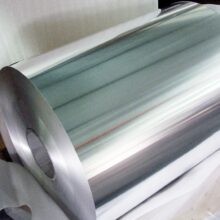
Aluminum foil for kitchen parameters Surface Teatment: One side bright, another side dull. Printing: coloured gold, rose gold Embossed: 3d pattern Thickness: 20mts, 10 mic, 15 micron etc Sizes: 1m, 40*600cm, 40x100 cm etc Characteristics and uses of kitchen aluminum foil Aluminum foil is a versatile and commonly used kitchen item that offers a range of benefits for cooking, food storage and othe ...

Introduction The world of packaging relies on materials that blend formability, barrier performance, and safety. Among aluminum foil solutions, the 8021 O Cold Forming Aluminum Foil stands out for applications that demand high drawability, reliable barrier properties, and compatibility with automated forming processes. This article dives into what 8021 O Cold Forming Aluminum Foil is, why it excels in cold fo ...

What is Aluminum foil for decoration Aluminum foil for decoration is a specially processed aluminum foil product, which is mainly used for decoration, packaging and handmade purposes. It is usually smoother and glossier than ordinary aluminum foil, and can be printed with different patterns and colors to increase its decorative and visual effects. Decorative aluminum foil is usually used to make gift boxes ...

In today’s connected world, a reliable Wi-Fi connection is essential for work, entertainment, and communication. With various devices vying for bandwidth and an increasing number of connected homes, ensuring optimal Wi-Fi performance can be a challenge. Surprisingly, a common household item, aluminum foil, can potentially enhance your Wi-Fi signals. In this article, we will explore the science behind Wi- ...
Aluminum foil rolling produces plastic deformation under the conditions of roll-free rolling. At this time, the rolling mill frame is elastically deformed and the rolls are elastically flattened. When the thickness of the rolled piece reaches a smaller and more limited thickness h. When the rolling pressure has no effect, it is very difficult to make the rolled piece thinner. Usually two pieces of aluminum foi ...
In the production of double foil, the rolling of aluminum foil is divided into three processes: rough rolling, intermediate rolling, and finishing rolling. From a technological point of view, it can be roughly divided from the thickness of the rolling exit. The general method is that the exit thickness is greater than Or equal to 0.05mm is rough rolling, the exit thickness is between 0.013 and 0.05 is intermediat ...

Industrial Aluminum Rust: Causes, Prevention, and Lifespan Extension Aluminum is widely used in industrial fields such as aerospace, automotive manufacturing, construction machinery, and chemical equipment due to its lightweight, high strength-to-weight ratio, and good thermal conductivity. However, "aluminum rust" (corrosion products of aluminum) remains a key issue affecting the service life and safety of indu ...

Analysis on Multi-Dosage Form Adaptability and Full-Dimensional Barrier Protection Performance of 8011 aluminum alloy foil for pharmaceutical packaging HW-A. Introduction: Core Requirements of Pharmaceutical Packaging Substrates and Positioning of 8011 Alloy Aluminum Foil Pharmaceutical packaging serves as the "last line of defense" for ensuring drug quality. Its substrate must meet three core requirements: ...

Manufacturing Process of Aluminum Cell Housing for Energy Storage Applications Aluminum cell housing manufacturing for energy storage applications is one of the core technologies supporting modern energy storage systems. It involves material selection, forming processes, surface treatment, sealing design, welding technology, and performance validation. This technology is widely applied in electric vehicles, stat ...