


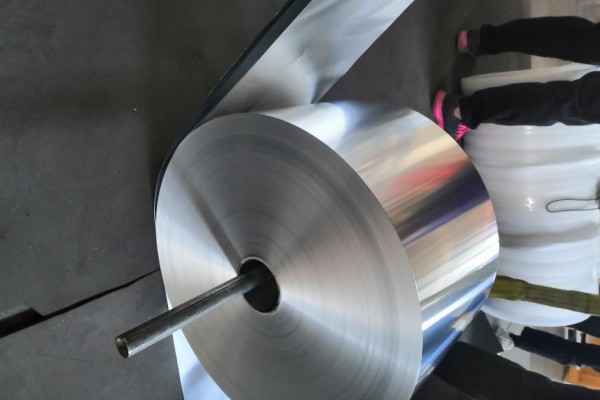
what is Industrial Aluminum Foil? Industrial aluminum foil is a kind of aluminium foil material used in industrial production, which is usually thicker and wider than ordinary household aluminium foil, and is more suitable for harsh industrial environments such as high temperatures and high pressure. Industrial size aluminium foil has good electrical conductivity, thermal conductivity, and corrosion resistanc ...

1070 aluminum foil introduction 1070 aluminum foil has high plasticity, corrosion resistance, good electrical and thermal conductivity, and is suitable for use in gaskets and capacitors made of aluminum foil. Huawei Aluminum introduced Zhuoshen foil rolling mill to ensure good plate shape. Warwick Aluminum's 1070 aluminum foil is used in electronic foil, with a market share of over 80%. The product has stable pe ...

What is aluminum foil paper? Aluminum foil paper, often referred to as aluminum foil, is a type of aluminum alloy foil. Aluminum foil paper is usually rolled into a very thin, flexible and highly ductile material that can be used in a variety of scenarios such as packaging, cooking, construction and electrical insulation. Is aluminum foil paper aluminum? Yes, aluminum foil is made of aluminum metal. It is ...

Alloy parameters of aluminum foil for cups Aluminium foil for cups is usually made of aluminium alloy materials with good processability and corrosion resistance, mainly including 8000 series and 3000 series. --3003 aluminum alloy Alloy composition Al 96.8% - 99.5%, Mn 1.0% - 1.5% Physical properties density 2.73g/cm³, thermal expansion coefficient 23.1×10^-6/K, thermal conductivity 125 W/(m K), e ...

What is a lidding foil? Lidding foil, also known as lid foil or lid, is a thin sheet of aluminum or composite material used to seal containers such as cups, jars, and trays to protect the contents inside. Lidding foils come in a variety of shapes, sizes, and designs to suit different types of containers and packaging applications. They can be printed with branding, logos, and product information to enhance a ...
In the production process of aluminum foil, there are multiple processes such as rolling, finishing, annealing, packaging, etc. The interlocking production process, any problem in any link may cause aluminum foil quality problems. The quality defects of the purchased aluminum foil products will not only affect the appearance, but also directly affect the quality of the products produced, and even more directly ca ...
Technical Analysis of Wrinkle-Free 6061 Aluminum Foil Containers 1. Introduction 6061 (Al–Mg–Si) aluminum alloy combines excellent strength, thermal performance, and dimensional stability. When properly processed, it can be used to manufacture wrinkle-free aluminum foil containers suitable for high-end, ovenable, and technically demanding packaging applications. Achieving stable, wrinkle-free container walls ...

Global Trends in Pharmaceutical Aluminum Foil Pricing for 2026: Market Growth, Cost Pressures, and Future Directions Abstract: Entering the Bingwu Year of the Horse (2026), the global pharmaceutical aluminum foil market continues to grow steadily, driven by stable demand from the pharmaceutical industry. This article provides an in-depth analysis of the market size, price ranges for major products, core cost st ...

Coated vs. Composite Aluminum Foil: A Guide to Advanced Material Solutions Introduction: Two Paths to Enhancing a Classic Material Aluminum foil is a ubiquitous material, prized for its barrier properties, formability, and light weight. To meet the complex demands of modern industries, it has evolved through two primary technologies: coating and compositing. These processes create specialized materials that po ...

Coated Aluminum Foil Rolls: A Comprehensive Guide to Production, Application, and Supplier Selection
Coated Aluminum Foil Rolls: A Comprehensive Guide to Production, Application, and Supplier Selection Coated aluminum foil rolls are high-performance materials consisting of aluminum foil substrates laminated with specialized functional coatings. They significantly enhance the barrier, anti-corrosion, heat-seal, and decorative properties of the base foil, making them an indispensable material in advanced manufact ...
Since aluminum foil has shiny and matte sides, most of the resources found on search engines say this: When cooking food wrapped or covered with aluminum foil, the shiny side should face down, facing the food, and the dumb side Glossy side up. This is because the glossy surface is more reflective, so it reflects more radiant heat than matte, making the food easier to cook. Is it really? Let's analyze the heat ...