

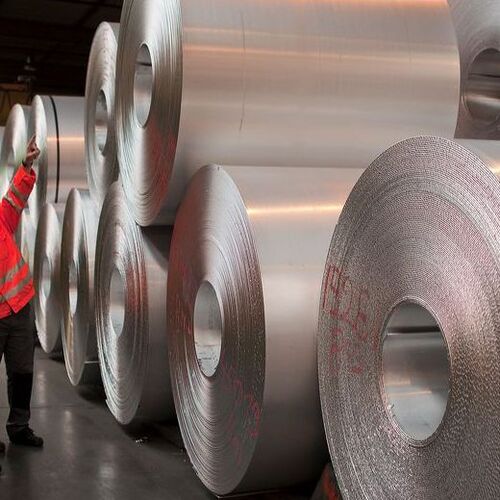
Introduction to industrial aluminum foil What is industrial aluminum foil? Aluminum foil is a kind of aluminum rolled material. Aluminum foil mainly refers to thickness. In the industry, aluminum products with a thickness of less than 0.2mm are usually called aluminum foil. They are usually cut longitudinally at the edges and delivered in rolls. Industrial aluminum foil, as the name suggests, is an aluminum foil ...

Cold Aluminum A Complete Engineering Guide In the world of advanced manufacturing, where precision meets performance, a specialized class of materials forms the backbone of innovation. Known for its exceptional strength, superior dimensional accuracy, and excellent surface finish, Cold Aluminum represents a pinnacle of metallurgical processing. Unlike its as-cast or hot-worked counterparts, Cold Aluminum is t ...

Alloy parameters of aluminum foil for labels Alloy type: 1xxx, 3xxx, 8xxx Thickness: 0.01mm-0.2mm Width: 100mm-800mm Hardness: To ensure the stability and processability of the label. Surface treatment: Coating or painting treatment to improve the corrosion resistance and aesthetics of the label. Alloy type of aluminum foil for labels 1050, 1060, 1100 With high purity ...

Honeycomb Aluminium foil Details Typical alloy 3003 5052 Temper O,H14, H16, H22, H24, O、H12、H14、H16、H18、H19、H22、H24、H26 Thickness (mm) 0.005-0.2 0.03-0.2 Width (mm) 20-2000 20-2000 Length (mm) Customized Treatment mill finish payment method LC/TT what is Honeycomb aluminum foil? Honeycomb aluminum foil has the advantages of light weight, high strengt ...

What is 3005 aluminum foil? 3005 aluminum foil alloy is a more commonly used type of 3000 series aluminum metal besides 3003 and 3004 alloys. It is an aluminum foil product made of 3005 aluminum alloy and has many excellent properties and application fields. 3xxx series aluminum alloy is called rust-proof aluminum, in which a small amount of manganese is added to improve the rust-proof performance, so 3005 alumi ...

3003 Aluminum Foil – Comprehensive Anti-Rust and Corrosion-Resistant Alloy Foil Solution 3003 aluminum foil, as a typical representative of aluminum–manganese alloy, uses manganese as the core alloying element (content 1.0%–1.5%). It combines excellent anti-rust and corrosion resistance, balanced mechanical strength, and good processing and forming performance. Its strength is approximately 30% higher than pure ...

Food-Grade Aluminum Foil Certification Requirements The global regulatory landscape for food-grade aluminum foil has evolved rapidly, driven by stricter food safety laws, advanced migration testing methods, and increasing consumer awareness. Today, achieving qualification is no longer limited to meeting basic national standards—it requires a multilayered system touching metallurgy, surface chemistry, process va ...
8006 aluminum foil is mainly used for food packaging, such as milk boxes, juice boxes, etc. 8006 aluminum foil has good corrosion resistance and mechanical properties, which can meet various packaging needs. 8011 aluminum foil is a common aluminum alloy material, mainly used in food packaging and pharmaceutical packaging. 8011 aluminum foil has good waterproof, moisture-proof and oxidation-proof properties, an ...

The thickness of aluminum foil for food packaging is generally between 0.015-0.03 mm. The exact thickness of aluminum foil you choose depends on the type of food being packaged and the desired shelf life. For food that needs to be stored for a long time, it is recommended to choose thicker aluminum foil, such as 0.02-0.03 mm, to provide better protection against oxygen, water, moisture and ultraviolet rays, th ...

Cold Form Aluminum + PTP Foil: Building a Dual-Aluminum High-Barrier Shield for Pharmaceutical Blister Packaging As drug stability requirements grow increasingly stringent, traditional PVC blister with PTP foil packaging can be insufficient for drugs highly sensitive to moisture and oxygen. The combination of Cold Form Aluminum and PTP (Press-Through-Pack) pharmaceutical lidding foil is becoming a key technolo ...

Why Aluminum Foil Cracks During Deep Drawing Aluminum foil deep drawing failure is a common manufacturing challenge that occurs when thin-gauge foil undergoes excessive tensile strain, leading to cracking, tearing, or edge fractures during forming. Since deep drawing requires the foil to stretch over complex geometries while maintaining barrier integrity, understanding the mechanisms behind cracking is essential ...