


1. Introduction of Aluminium Foil Used for Ventilation In the ever-evolving field of HVAC (Heating, Ventilation, and Air Conditioning), material innovation plays a central role in achieving energy efficiency, thermal comfort, and sustainable building performance. Among the array of materials used, aluminium foil has become a cornerstone in ventilation applications due to its unique combination of physical pro ...
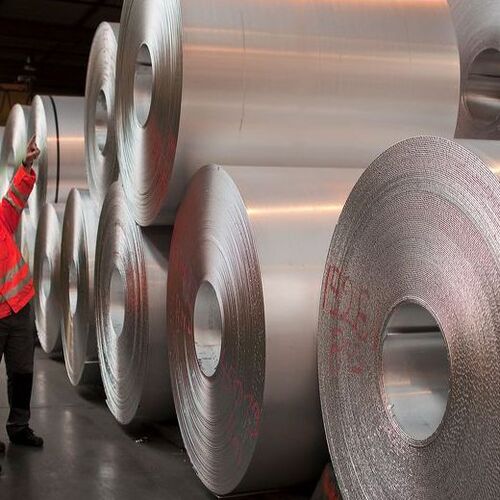
Introduction to industrial aluminum foil What is industrial aluminum foil? Aluminum foil is a kind of aluminum rolled material. Aluminum foil mainly refers to thickness. In the industry, aluminum products with a thickness of less than 0.2mm are usually called aluminum foil. They are usually cut longitudinally at the edges and delivered in rolls. Industrial aluminum foil, as the name suggests, is an aluminum foil ...

Aluminum foil thickness for different purposes Alloy Alloy state Typical thickness(mm) Processing methods End use smoke foil 1235-O、8079-O 0.006~0.007 Composite paper, coloring, printing, etc. Used in cigarette packaging after lining, printing or painting. Flexible packaging foil 8079-O、1235-O 0.006~0.009 Composite paper, plastic film embossing, coloring, printi ...

Introduction of 8006 alloy aluminum foil 8006 alloy aluminum foil is a non-heat treatable aluminum alloy. The 8006 aluminum foil product has a bright surface and is degreasing clean. Especially suitable for making wrinkle-free lunch boxes. Huawei Aluminum's 8006 aluminum foil adopts hot rolling method, and the tensile strength is between 123-135Mpa. Aluminum 8006 alloy composition 8006 aluminum alloy is an ...

Aluminum foil for heat seal product Aluminum foil heat seal coating is a common packaging material. Aluminum foil for heat seal has good moisture-proof, anti-fluorination, anti-ultraviolet and other properties, and can protect food, medicine and other items that are susceptible to external influences. Characteristics of heat sealing aluminum foil During the production process of aluminum foil heat seal coa ...

1. Introduction: Despite their frequent interchange in everyday language, tin foil and aluminum foil are not the same. This confusion, though seemingly minor, has implications in cooking performance, food safety, environmental impact, and industrial use. Understanding the difference is not only useful for culinary professionals and manufacturers, but also essential for environmentally conscious consumers. ...

3003 Aluminum Foil for Food Packaging – Thickness, Strength and Barrier Performance Introduction 3003 aluminum foil packaging has become a preferred material for modern food preservation because of its enhanced strength, corrosion resistance, and stable barrier performance. Unlike pure aluminum grades, the 3003 alloy contains manganese, offering improved mechanical durability and better work-hardening behavior, ...

Understanding of coated aluminum foil Coated aluminum foil is a special treatment process that covers one or more layers on the surface of aluminum foil. It is a composite material widely used in packaging, insulation and industrial applications. The structure of coated aluminum foil usually consists of multiple layers, including an aluminum foil substrate and various coatings designed for specific functions. ...
For the capsule shell, because it is made of aluminum, aluminum is an infinitely recyclable material. Capsule coffee generally uses an aluminum casing. Aluminum is the most protective material at present. It can not only lock the aroma of coffee, but also is light in weight and high in strength. At the same time, aluminum protects the coffee from foreign substances such as oxygen, moisture and light. For cof ...

Baking and Grilling Packaging Solutions — Heat Resistance of 8011 Aluminum Foil 1. Introduction In the modern food industry, aluminum foil has become an indispensable material due to its excellent thermal stability, corrosion resistance, and adaptability to various packaging forms. Among all alloy grades, 8011 aluminum foil is widely used for baking, grilling, and high-temperature packaging solutions. Its abili ...
The selection principle of pass processing rate is as follows: (1) Under the premise that the equipment capacity allows the rolling oil to have good lubrication and cooling performance, and can obtain good surface quality and shape quality, the plasticity of the rolled metal should be fully utilized, and the large pass processing rate should be used as much as possible to improve the rolling mill Production ef ...