

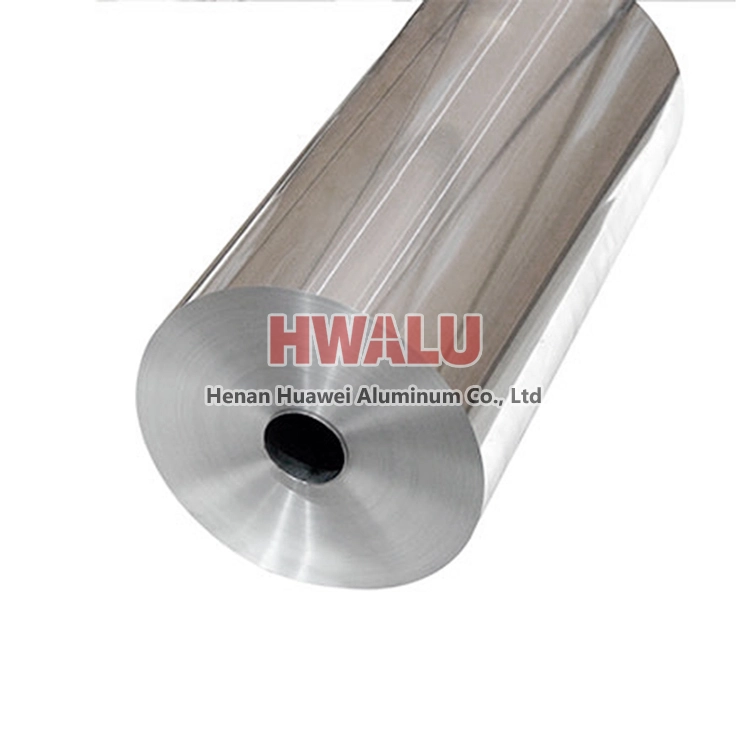
what is Industrial Aluminum Foil? Industrial aluminum foil is a kind of aluminium foil material used in industrial production, which is usually thicker and wider than ordinary household aluminium foil, and is more suitable for harsh industrial environments such as high temperatures and high pressure. Industrial size aluminium foil has good electrical conductivity, thermal conductivity, and corrosion resistanc ...
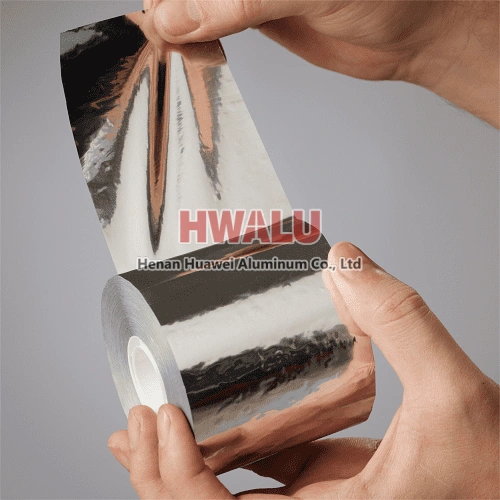
What is aluminum foil paper? Aluminum foil paper, often referred to as aluminum foil, is a type of aluminum alloy foil. Aluminum foil paper is usually rolled into a very thin, flexible and highly ductile material that can be used in a variety of scenarios such as packaging, cooking, construction and electrical insulation. Is aluminum foil paper aluminum? Yes, aluminum foil is made of aluminum metal. It is ...
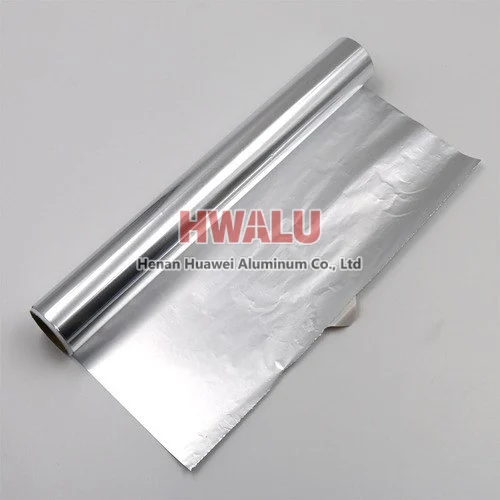
What is 13 micron aluminum foil? "Aluminum Foil 13 Micron" is a thin and light aluminum foil that falls within the thickness range of household aluminum foil and is commonly used for various packaging and insulation purposes. It is a very common thickness specification. 13 micron aluminum foil equivalent name 13μm aluminum foil 0.013mm aluminum foil Household packaging aluminum foil 13 micron aluminum foil ...

Custom printing aluminum foil jumbo roll The printing process and precautions of aluminum foil for medicine packs The process flow of packaging aluminum foil is: aluminum foil unwinding -> gravure printing -> drying -> protective layer coating -> drying -> adhesive layer coating -> drying -> aluminum foil winding. In order to achieve the above-mentioned performance requirements in the PTP ...

Single zero aluminum foil refers to aluminum foil with a thickness between 0.01mm ( 10 micron ) and 0.1mm ( 100 micron ). 0.01mm ( 10 micron ), 0.011mm ( 11 micron ), 0.012mm ( 12 micron ), 0.13mm ( 13 micron ), 0.14mm ( 14 micron ), 0.15mm ( 15 micron ), 0.16mm ( 16 micron ), 0.17mm ( 17 micron ), 0.18mm ( 18 micron ), 0.19mm ( 19 micron ) 0.02mm ( 20 micron ), 0.021mm ( 21 micron ), 0.022mm ( 22 micron ...
Aluminum foil packaging development history: Aluminum foil packaging began in the early 20th century, when aluminum foil as the most expensive packaging material, only used for high-grade packaging. In 1911, the Swiss confectionery company began wrapping chocolate in aluminum foil, gradually replacing tinfoil in popularity. In 1913, based on the success of aluminum smelting, the United States began to produce ...
Aluminum foil has the following advantages in food packaging: Barrier property. Aluminum foil has excellent resistance to water, air (oxygen), light, and microorganisms, which are important factors in food spoilage. Therefore, aluminum foil has a good protective effect on food. Easy processing. Aluminum has a low melting point, good heat sealing, and easy molding. Can be processed into any shape according to ...
After printing and coating, aluminum foil paper and cash register paper need to be post-printed and slit on a slitting machine to cut large rolls of semi-finished products into the required specifications. The semi-finished products that run on the slitting machine are an unwinding and rewinding. This process includes two parts: machine speed control and tension control. The so-called tension is to pull the al ...
Coated aluminum foil is formed after surface treatment on the basis of non-coated aluminum foil. In addition to the chemical composition, mechanical properties and geometric dimensions required by the above non-coated aluminum foil, it should also have good shape and shape. coating properties. 1. Plate type of aluminum foil: First of all, the production process of coated aluminum foil requires that the alum ...
Fire or explosion in aluminum foil rolling must meet three conditions: combustible materials, such as rolling oil, cotton yarn, hose, etc.; combustible materials, that is, oxygen in the air; fire source and high temperature, such as friction, electric sparks, static electricity, open flames, etc. . Without one of these conditions, it will not burn and explode. The oil vapor and oxygen in the air generated duri ...
https://www.youtube.com/watch?v=ZR_JvbVongU The shocking statistics released by the National Center for Cardiovascular Diseases suggest that China has the highest occurrence of sudden cardiac deaths (SCD) in the world, accounting for over 544,000 deaths annually. That is to say, SCDs occur at a rate of 1,500 people/day or one person/minute in China. According to David Jin, general manager of Henan Huawei Alumi ...